
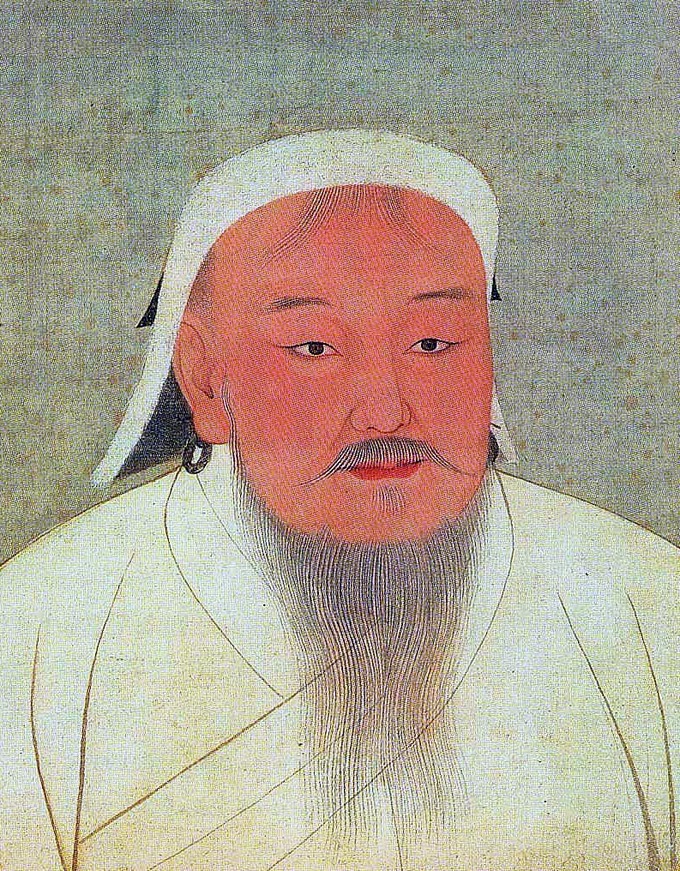
Genghis Khan, born Temujin, was the founder and first Great Khan of the Mongol Empire. Rising from a difficult childhood marked by tribal warfare, exile, and betrayal, he gradually united the nomadic Mongol tribes under his leadership through military skill, alliances, and political reform.
In 1206, after consolidating power across the Mongolian steppes, Temujin was proclaimed 'Genghis Khan,' meaning universal ruler. From that point onward, he launched a series of military campaigns that transformed the Mongols into one of the most powerful forces in world history.
Genghis Khan’s armies conquered vast territories across Asia, including parts of northern China, Central Asia, and Persia. His military success was built on exceptional mobility, disciplined cavalry tactics, psychological warfare, intelligence networks, and merit-based leadership uncommon for the era.
Although his campaigns were often devastating and resulted in massive destruction and loss of life, Genghis Khan also promoted trade, communication, and religious tolerance throughout his empire. The expansion of the Mongol Empire strengthened connections between East and West, contributing to cultural exchange along the Silk Road.
After his death in 1227, his descendants continued expanding the empire across Eurasia, creating the largest contiguous land empire in history. Genghis Khan remains one of the most influential and controversial figures in world history, remembered both as a brilliant strategist and as a conqueror whose campaigns reshaped entire civilizations.